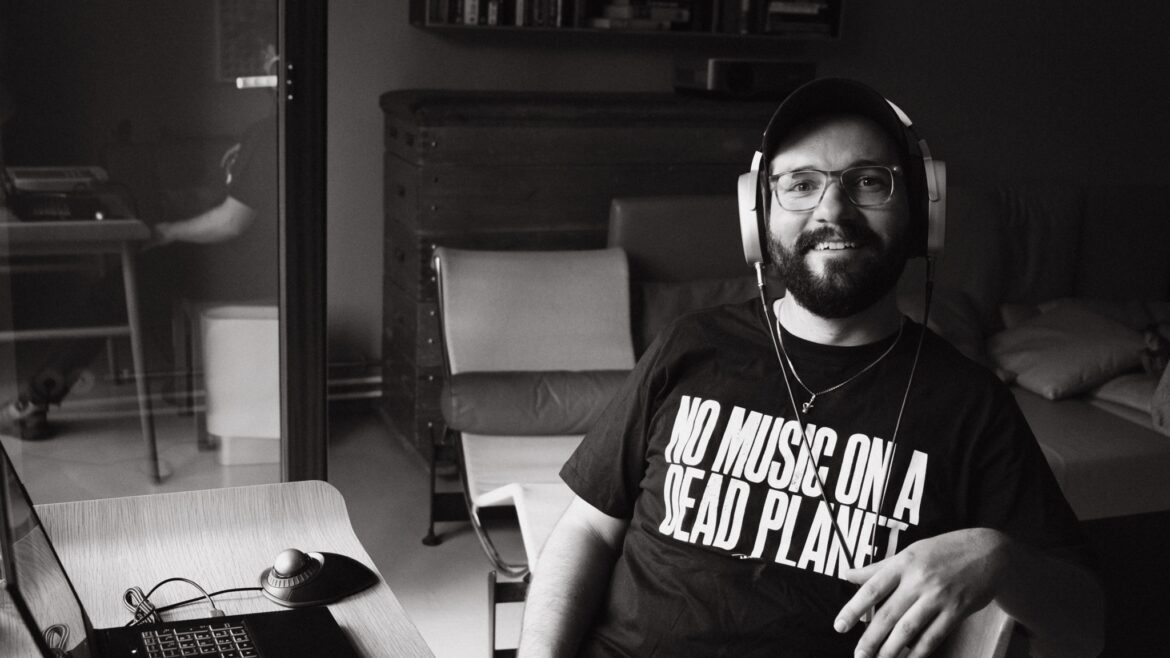

Third instalment of our artist portrait series, and this time with someone whose name appears on records by The Mars Volta, At The Drive-In, Peter Doherty, Sportfreunde Stiller and Die Ärzte. Flo Siller is a mastering engineer in Hamburg. He has remastered the complete catalogues of The Mars Volta, Omar Rodríguez-López and the Portuguese singer-songwriter José "Zeca" Afonso, including the GRAMMY-winning "Wax Simulacra". And he masters on Linux, which almost nobody in his profession does.
For us there is one more thing: three features in OBERTON exist only because Flo asked for them by email. But one thing at a time.
Flo Siller Mastering and Soundgarden
To understand Flo, you first need to know Soundgarden . The Hamburg studio was founded in the early nineties by Chris von Rautenkranz and Christian Mevs and shaped an entire era: Blumfeld, Tocotronic and Die Sterne, the core of the so-called Hamburger Schule, all worked there. Chris von Rautenkranz has focused on mastering since 2000. The house motto is still the same today: "We listen… since 1990."
Since 2015 Flo has worked there as a mastering and production engineer alongside Chris von Rautenkranz, on records that went gold and platinum. In 2019 he added his own studio: Flo Siller Mastering, with a "planet-friendly" approach, meaning masters with the greatest possible musical and the smallest possible environmental impact. His client list includes BMG, Sony Music, Universal and Warner alongside more than twenty independent labels, plus names like Teri Gender Bender, Pantha Du Prince, WARGIRL, JEREMIAS and A$AP Twelvy.
From a Walkman to a studio by the woods to Hamburg
Asked how he got into music, he names a culprit first:
The Sony Walkman is to blame! Even as a kid I could not part with my headphones, I was in love. My poor cassette of Michael Jackson's "Dangerous" really took a beating.
Skateboarding led him into subculture in the mid 2000s, then punk, hip hop and noise. Rural Thuringia, he writes, practically pushed his circle of friends into doing things themselves. Bands were formed, and someone had to take care of the recordings:
So I put all the money from my civilian service into a few small rooms at the edge of the woods and recorded every band that somehow found its way to the studio. From a 4-track Portastudio to an 8-track tape machine, a lot of it was still analogue and mostly live.
On the side came live sound, small tours and a degree in media technology. In Dresden he then fell in love with electronic music, went deeper into mastering through remixes and, as a working student at MAGIX, came into contact with Sequoia users, among them some of the biggest mastering studios in the world. The door to Hamburg was opened by the late Christian Smukal, who ran Rückkopplung Hamburg. Through him Flo met Chris von Rautenkranz, and an internship turned into a full-time job:
That allowed me to devote myself entirely to the subject, and for the first time I could make a living from working with other people's music.
What you cannot learn from books at Soundgarden
He had read a lot beforehand. That knowledge opened the door, but it did not prepare him for everyday reality:
What I had read could not prepare me for what it is really like to finish quality control at 7 in the morning after working through the night, when the producer has already gone home and the label needs the finals for the pressing plant at 8 so the records arrive in time for the tour.
He describes the most valuable part of the early years as a kind of express apprenticeship:
For many jobs Chris and I did internal shootouts, where we each made a master and then compared them and talked about them. A total privilege, because I could never have learned those insights from a book.
And along the way, he writes, he also learned how important good coffee is in a studio.
Remastering catalogues that many consider sacred
The work on the catalogues of The Mars Volta and Zeca Afonso starts long before the first fader moves:
With maximum care and as much data as possible! Whether it is analogue tapes, DATs, CDs or vinyl, I spend a lot of time collecting sources and compare intensively which one works best. The first format generation does not always win.
His understanding of remastering is remarkably restrained:
In remastering, the actual work on the sound should not create or reinvent, but at best free up the original production a little. Current conversion and restoration technology makes a lot possible, but of course not everything is necessary.
Big projects like these are a special mode, he writes, one where his inner hunter and gatherer can really come into its own.
Mastering on Linux, and what is still missing
The honest answer first: he has not fully switched yet. He has used Linux privately and for office work for years, while in the studio he runs both systems side by side. The trigger was practical, old hardware no longer worked under Windows. Then came something more fundamental:
I also felt more and more patronised by Big Tech, and with all the advertising and the restrictions on privacy it was no fun anymore.
With the end of support for Windows 10 he tried the switch and documented it in an ongoing blog. He has since finished many projects in a hybrid setup, with the lion's share of the work done under Linux. He is precise about what is missing: a professional editor with the right tools, more choice for demanding tasks like limiting, and despite available ALSA drivers he has not yet managed to get the studio's MERGING network devices running. Still, his verdict is relaxed:
Maybe that sums up the cliché of the "Year of the Linux Desktop", but I am in no hurry.
A workstation that lives entirely in the box
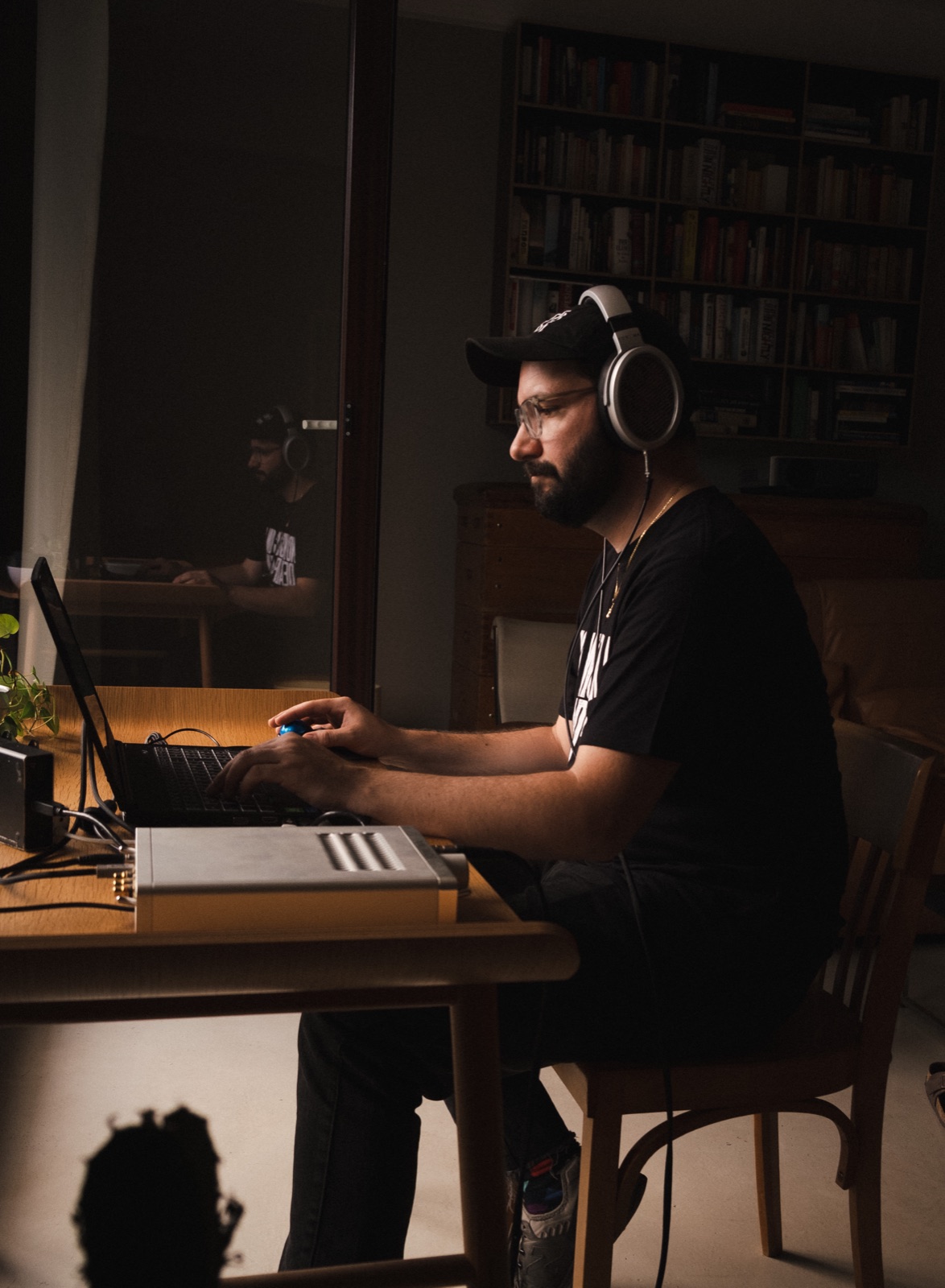
"Pretty modest," he says himself. He works entirely in the box. He has tested analogue routes over the years but never adopted them. He does not rule out a hybrid future, though, because turning real knobs is fun.
His stationary system in Hamburg is a Marius Mainframe workstation, running MAGIX Samplitude under Windows and Cockos REAPER under Linux, plus iZotope RX and Steinberg SpectraLayers Pro. Monitoring is on an electrostatic headphone system by Warwick Acoustics. For travel and as a backup there is a second system: a laptop from Digital AudionetworX, in-ear monitors by 64 Audio and a small DAC and amplifier from Chord Electronics. In the interest of transparency: Flo is an official Chord Electronics endorser.
Why he masters almost exclusively on headphones
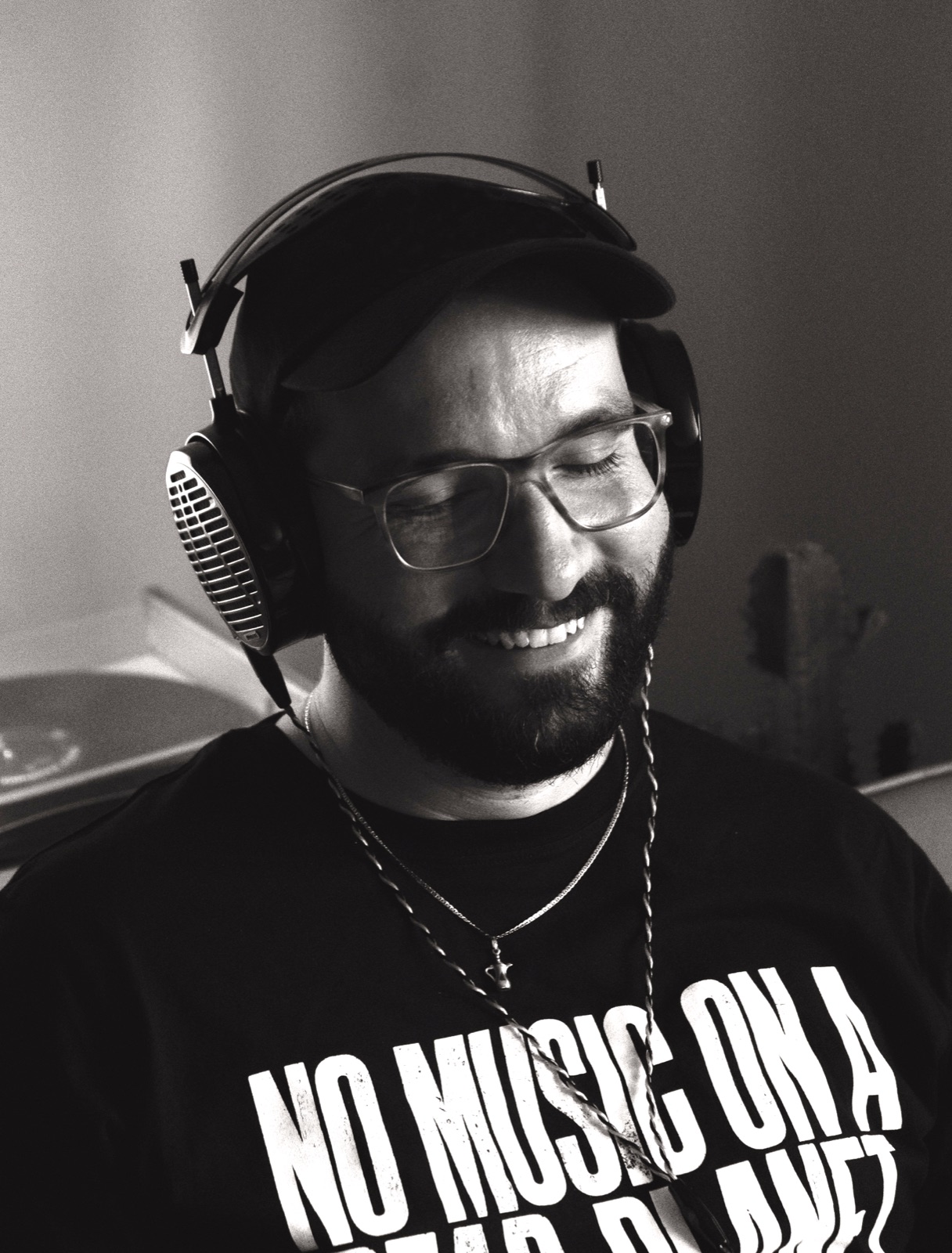
For many years he worked on speakers and headphones in parallel. For attended sessions and for checking test pressings he still uses Soundgarden with its ATC 110SL. His unattended work and online sessions, however, happen exclusively on headphones, preferably open electrostatic ones.
One detail from his answer is one of those tips you never forget:
Listening level matters too, because listening loud becomes a problem over time. For a good five years I have had a mark on my amp that keeps me grounded. Briefly going louder and then quieter again is also important and helpful.
And then the passage that explains why headphones are enough for professional mastering today:
Headphones are portable, very durable and efficient compared to treating a room and buying a pair of monitors of comparable quality. The technical progress of recent years is what makes it possible at all to master on headphones with portable systems instead of in a traditional environment.
How he knows that a master is finished
The answer contradicts the image of endless fine tuning:
I chase the ideas of my first impression and try not to get used to a sound for too long. Sometimes 90% of the master comes together in the first 5 minutes. After a break I listen again with fresh ears and take care of the last 10%, which can take considerably longer.
I often try several approaches and then realise when comparing afterwards that the instinctive, simple approach was better than the elaborate one. When I just press play, stop thinking and only hear the song, V1 is ready for the team.
Why loudness is not a mark of quality
In revisions, Flo writes, people rarely ask for more loudness. Far more often someone wants to hear a more dynamic version. He sums up what makes a good master in an image worth remembering:
A good master carries all the qualities of the production along without making negative compromises. It gives the mix as much as necessary with as few interventions as possible and never loses the song. I believe a good master follows the intention and rolls the ball of the production forward, not sideways.
What planet-friendly actually means in mastering
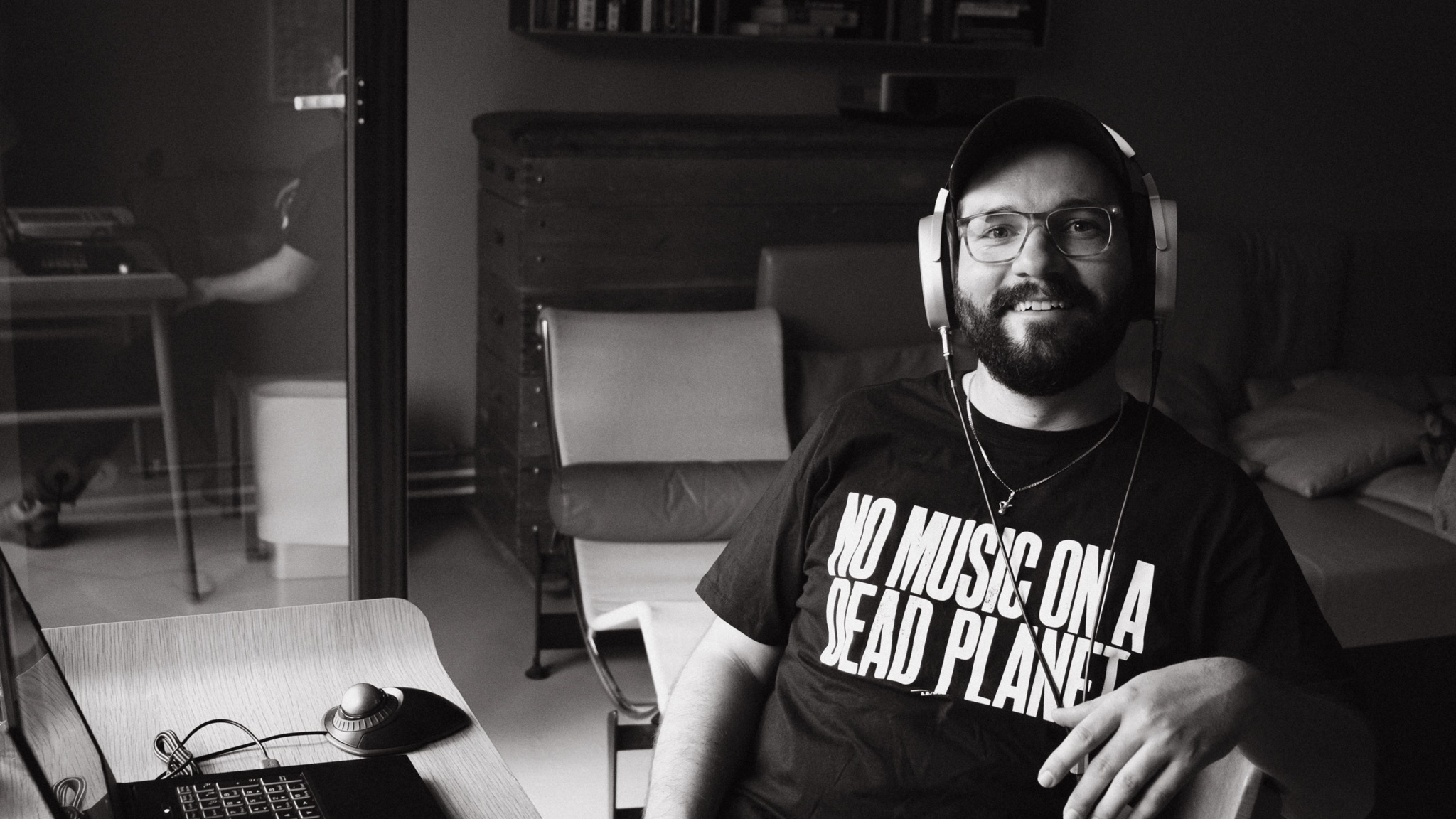
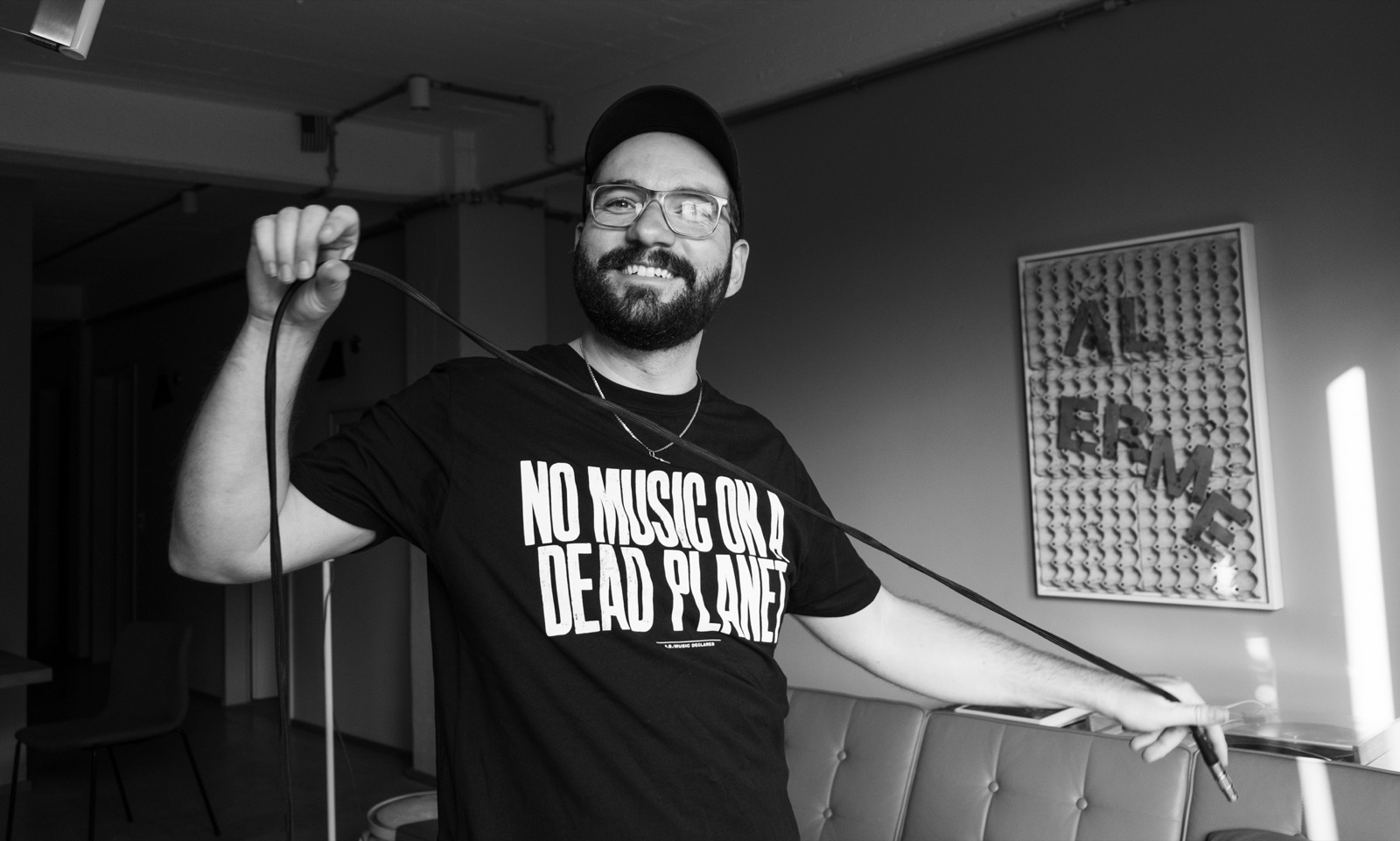
"No Music on a Dead Planet" is written on the shirt in the header image, and it is not a pose. Flo examined his working process with regard to man-made climate change. The result was a document that was later expanded as part of a master's thesis at the Popakademie Mannheim. Wherever his work causes emissions, he has either intervened gently or, at best, brought them down to zero.
Here too he stays honest:
Unfortunately, because of dependencies like rental agreements and so on, I am not yet where I would like to be. But many steps regarding energy consumption, data processing, hardware and business organisation turned out to be quite easy to implement.
Three OBERTON features that would not exist without him
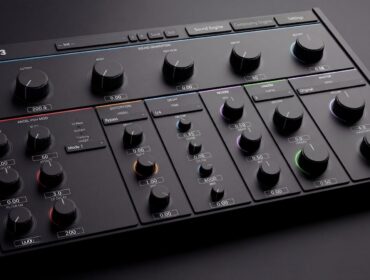
Now the part where we are biased, and we are saying so. In June 2026 Flo wrote to us for the first time. He had spent a long time looking for a Linux alternative to Wavesfactory Spectre and ended up with OBERTON . He was running the Harmonics Only mode on a parallel channel, dosed with a fader. The internal oversampling, however, introduced phase problems, so he asked whether it could be switched off.
Two days later the "Off" mode existed. Flo bought a licence and sent his next wishes: pure second and third harmonics, as he knew them from Kelvin by Tone Projects and had only found under Linux in the no longer maintained Calf plugins. These became Pure H2 and Pure H3. His follow-up question about a pentode-like harmonic series finally led to the Pentodesaturation type: a purely odd harmonic ladder of third, fifth and seventh harmonics that opens up as the drive increases, just like a valve stage that turns harsh when you push it.
We asked him how he actually uses the three today. The answer is more honest than we might have liked:
Even though it is great to have H2 and H3 available in their pure form, I mostly end up choosing between Tube (triode), Tape or Pentode. I decide very quickly and by blind test. A tool like that either fits the song or it doesn't. It is a great addition to my toolkit and gets tried on every project, whether in Harmonics Only mode in parallel or in the stereo chain.
So he asked for two features that he now uses less often than the third. And he already has another wish:
Being able to set the gain scale a bit more mastering-friendly would still help. Instead of the 12 dB shown, 3 or 6 dB would be helpful, that allows finer sweeping.
We have made a note of it. And because Flo made a point of it after reading the draft, this belongs here too:
I really enjoy using the plugin, even if the features I asked for don't always win.
What he tells people starting out in mastering
His first piece of advice has nothing to do with technology:
Listen to as much different music as possible! Developing and training a feel for different genres is extremely helpful, it builds musical empathy. Mastering as commissioned work does not happen in a vacuum and always depends on work other people have done before. There is no room for ego, because it is not your own music.
Be sceptical of information from the internet, seek contact with a real mastering studio and, if possible, do an internship. And then comes a paragraph aimed at an entire market:
Unfortunately, mastering is often presented as very radical intervention with complex tools like multiband dynamics, imaging and saturation, encouraged by so-called "mastering assistant" machine learning. But if you can make a master with a good EQ and a limiter that improves the mix, that is already a really good start.
A mastering engineer playing down saturation as a tool, in an article by a plugin maker. We are leaving it in, because he is right. His last sentence belongs to everyone who is just starting out:
And most important of all: while you work, always compare the master with the mix at matched loudness and ask yourself honestly whether your intervention really makes it better. Good luck!
Flo Siller answered the questions in writing, the quotes are translated from German. More about his work at flosillermastering.com, about Soundgarden at soundgarden.de. He documents his move to Linux in an ongoing series at linux-content.org.
OBERTON is a multiband saturator with a parametric EQ, six bands and fifteen saturation algorithms, including Pure H2, Pure H3 and Pentode. It runs on macOS, Windows and Linux. The demo has the full feature set.