
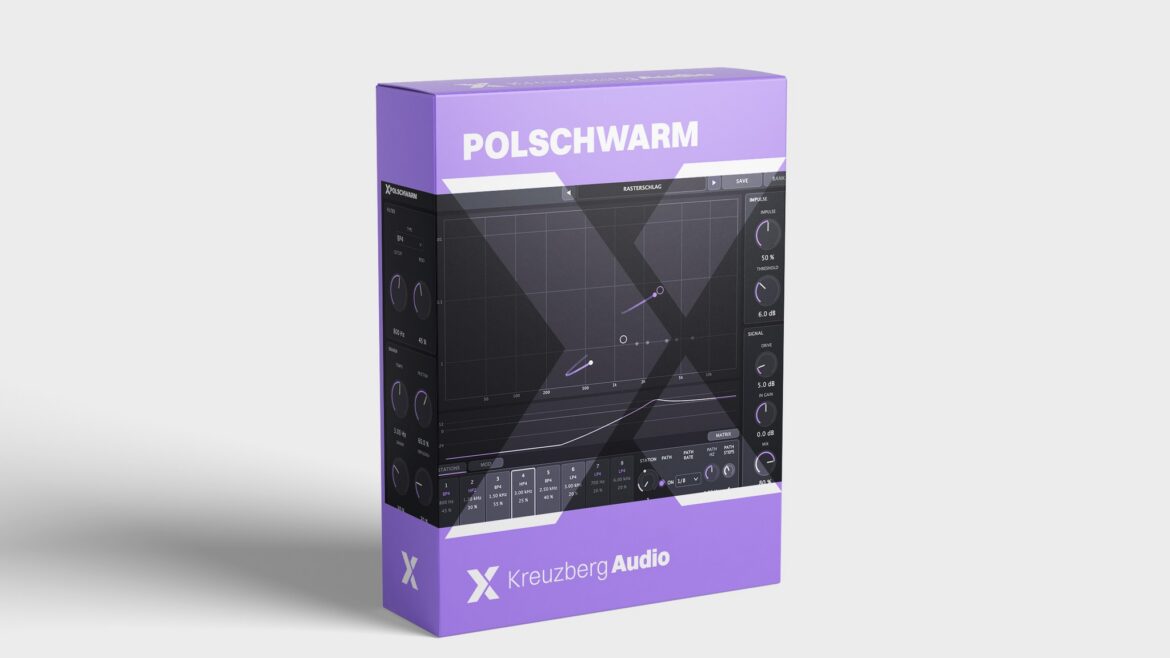
Resonances with mass, inertia and spring force. For basslines, leads and melodies that move without sounding like an LFO.
Resonances with mass and inertia
Every filter sweep you know works the same way: a cutoff value travels from A to B along a curve someone drew. An LFO, an envelope, an automation line. It sounds clean, but calculated, and you can hear it. Every bassline and every melody line has the same curve, every build the same arc.
A real analog filter has more life in it because its parts are sluggish. Plugins mostly model that as smoothing: the value lags a few milliseconds behind, nothing more.
POLSCHWARM turns this around. Here the resonances of the filter are seven bodies with their own mass and the inertia that comes with it. Each one hangs on a spring whose restoring force pulls it toward its target. Friction damps its motion, it is reflected at the boundaries of the field, and when two bodies get closer than their targets, a repulsive force acts between them. You set the target. The simulation computes the path there: acceleration, overshoot and decay, determined by mass, spring constant and damping, and by where and how fast the bodies are moving at that moment. We know of no other filter plugin in which the resonances themselves fly as bodies with mass, repel each other and make the path between two filter settings audible.
What you hear
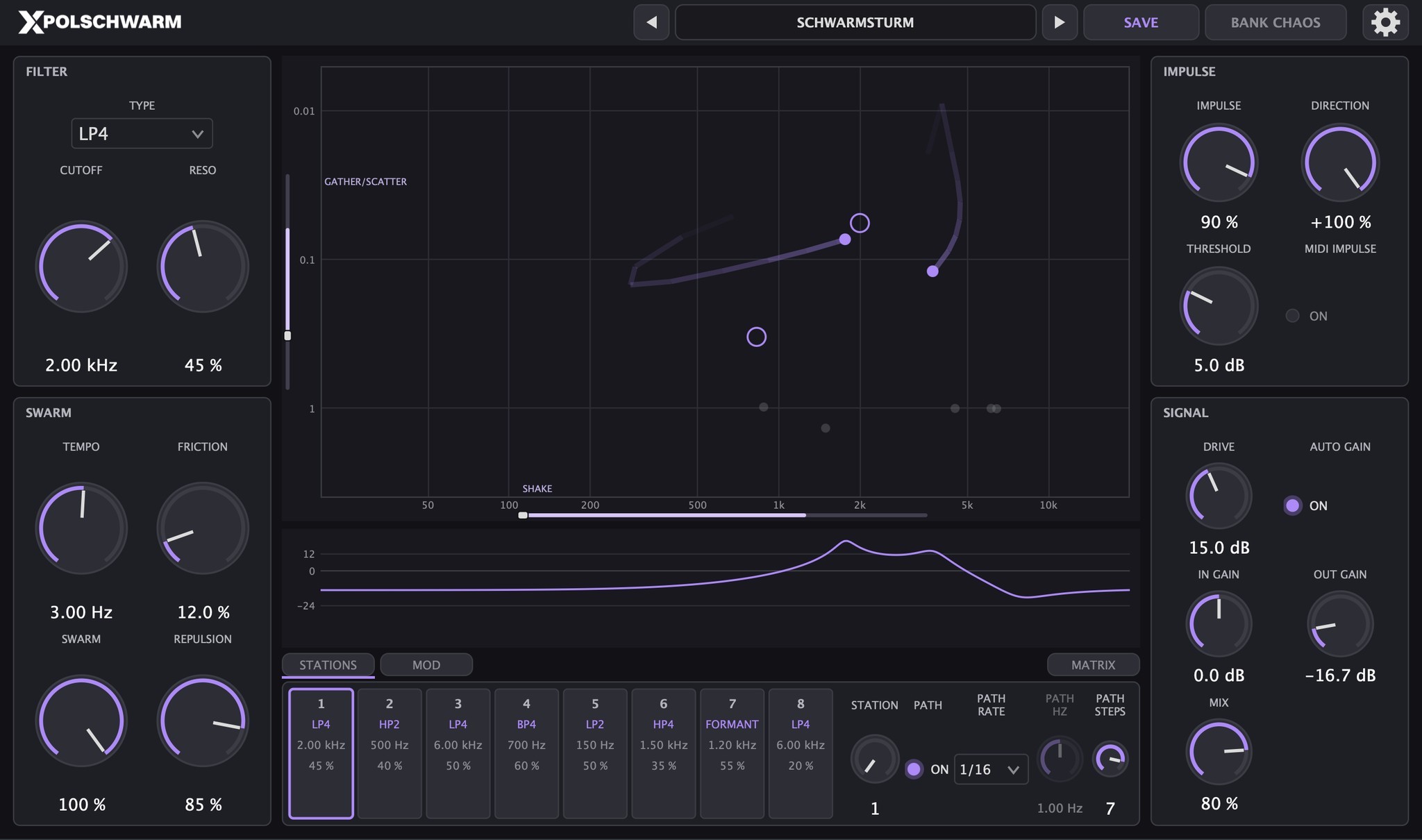
Set CUTOFF to 300 Hz, then jump to 2 kHz. A normal filter is there instantly or glides along a fixed ramp. In POLSCHWARM the bodies accelerate. The light ones, with their higher natural frequency, lead, the heavy ones follow with inertia, and depending on the damping they overshoot the target and decay. The filter traces a damped oscillation instead of a ramp. And because the bodies repel each other, peaks and gaps form in the spectrum along the way that exist in no setting and only live in flight.
Once the bodies come to rest, the filter is exactly what you set, sample for sample. The movement never costs you the sound you chose. All you hear is the flight there.
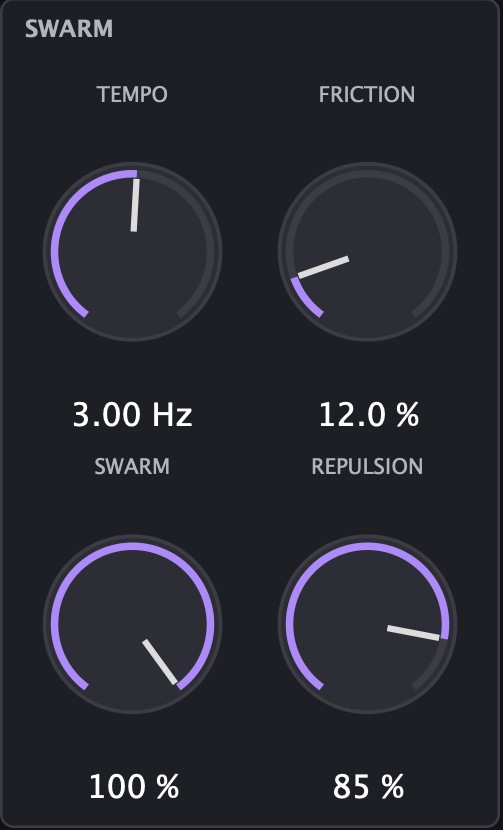
Four knobs shape the swarm:
- TEMPO sets the spring constant, expressed as a natural frequency: from 0.2 Hz for long, inert moves up to 40 Hz for an almost immediate response.
- SWARM spreads the mass. At zero all seven bodies fly alike, turned up they arrive clearly staggered, the resonances fan out and trail behind.
- FRICTION is the damping. Little friction means a long decay, a resonance that keeps ringing after every note. Lots of friction means short, solid moves.
- REPULSION sets the strength of the repulsive force between the bodies, active as soon as two get closer than their targets. That is where the swarm behavior comes from that gives the plugin its name.
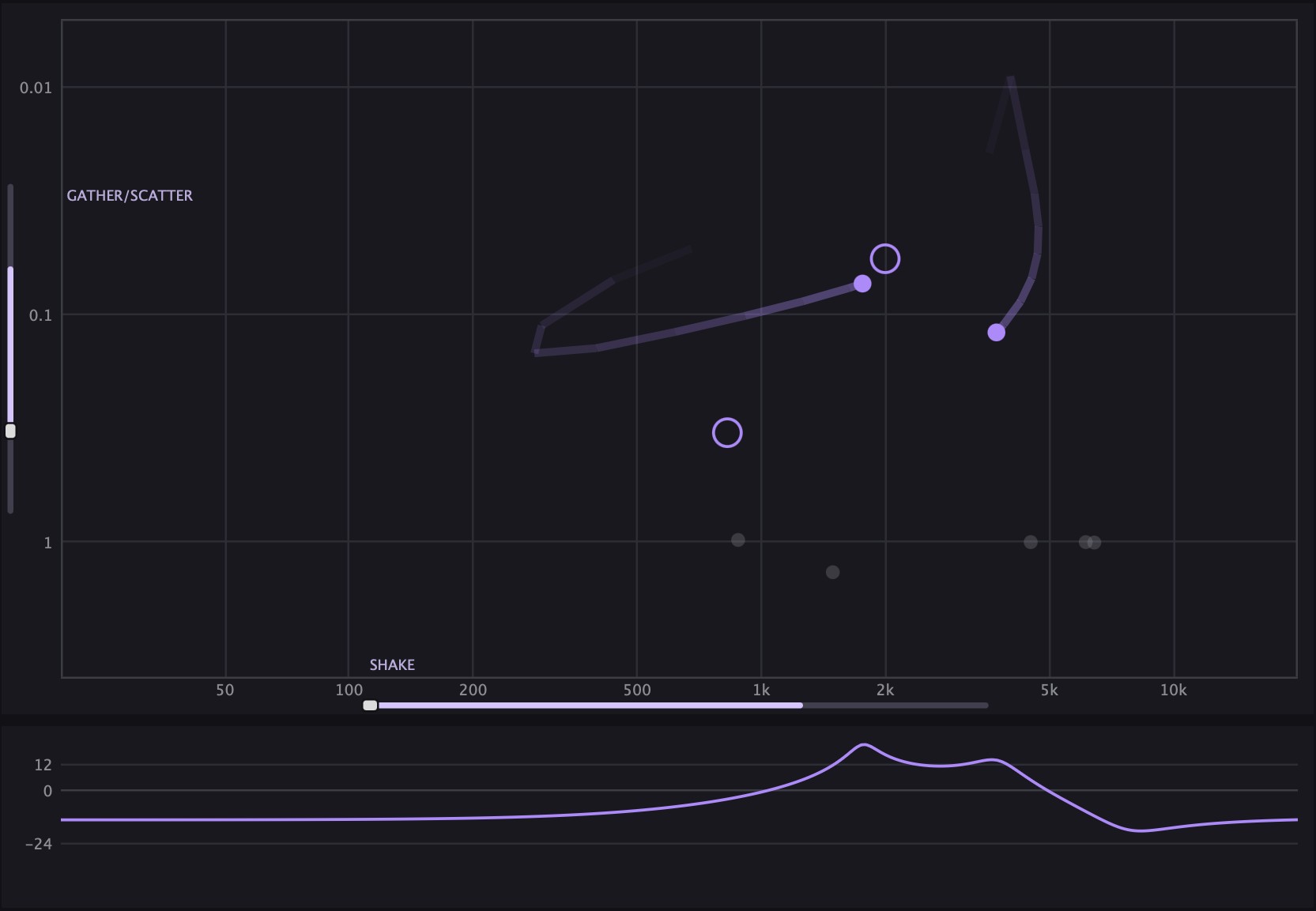
The swarm field in the middle of the interface shows it live: frequency from 20 Hz to 20 kHz across, damping up and down, every body a dot with a trail, every target a ring. Below it, the frequency response you are hearing right now.
Eight types, one swarm
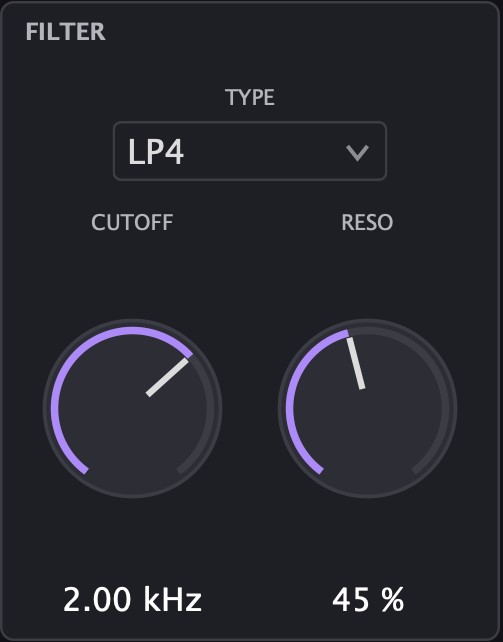
TYPE decides where the bodies fly. CUTOFF runs from 20 Hz to 20 kHz, RESO makes the resonances narrow or wide:
- LP2, LP4, LP6: low-pass with 12, 24 and 36 dB per octave. LP4 for bassline and lead, LP6 for the sub that closes down low.
- HP2, HP4: high-pass with 12 and 24 dB per octave. For hats, breaks and anything that should make room.
- BP4: fourth-order band-pass. Telephone, radio, a snare body that twitches.
- FORMANT: three peaks at a ratio of 1 to 2.7 to 4.2. Vowels whose bodies travel through the mouth one by one when they change.
- OVERTONES: seven peaks at one to seven times the cutoff frequency. A harmonic comb where every overtone flies as its own body.
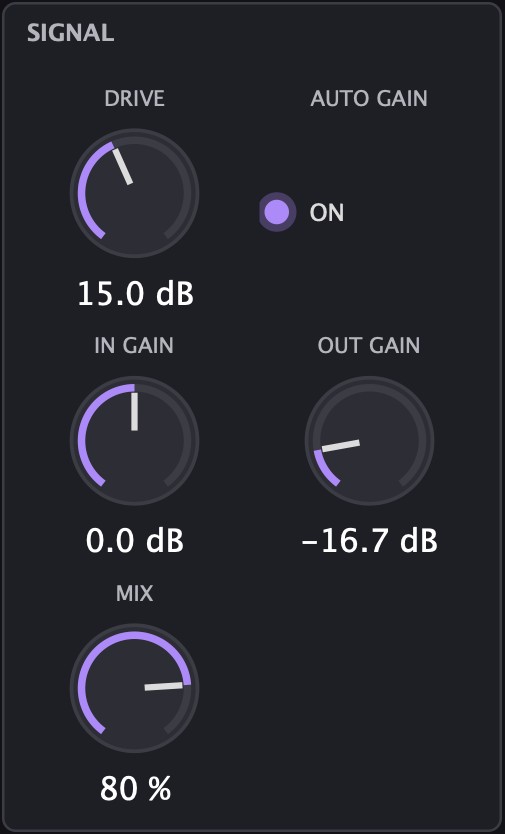
DRIVE saturates before each of the seven sections, up to 36 dB, instead of once at the end. AUTO GAIN holds the level so you compare movement, not loudness. MIX blends in the dry signal, latency-aligned.
IMPULSE: the hit that kicks the swarm
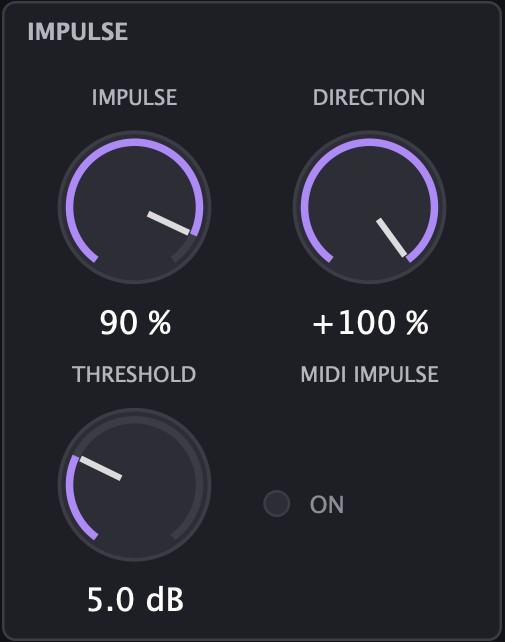
So far the swarm moves when you change the target. With IMPULSE your material moves it. A transient detector listens to the input, and every hit above the threshold transfers an impulse to the bodies. THRESHOLD from 0 to 18 dB sets how loud a hit has to be, DIRECTION sends the kick up or down, and with SWARM each body gets its own direction. The kick drives the bass filter open, the snare pushes the band-pass up, and in between everything swings back to rest, damped.
MIDI IMPULSE does the same with notes: every note transfers an impulse as strong as its velocity. Put POLSCHWARM on a synth bass and send it the MIDI track of the bassline, and loud notes get a wide swing and quiet ones a small one, without automating a single value.
Stations and PATH: the swarm on the move
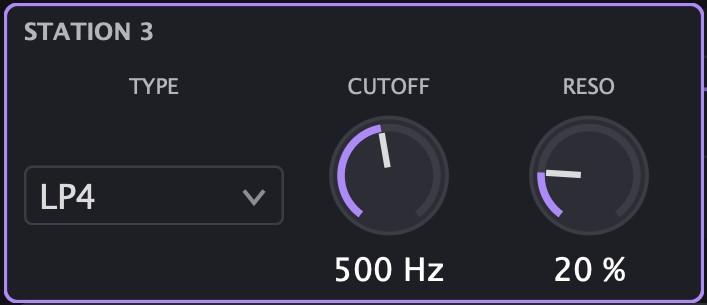
Eight stations, each with its own TYPE, CUTOFF and RESO. PATH leads the swarm from station to station, on the host grid from 1/16 to 4 bars, with triplets and dotted values, or free with PATH HZ from 0.05 to 20 Hz. PATH STEPS sets how many stations it walks.
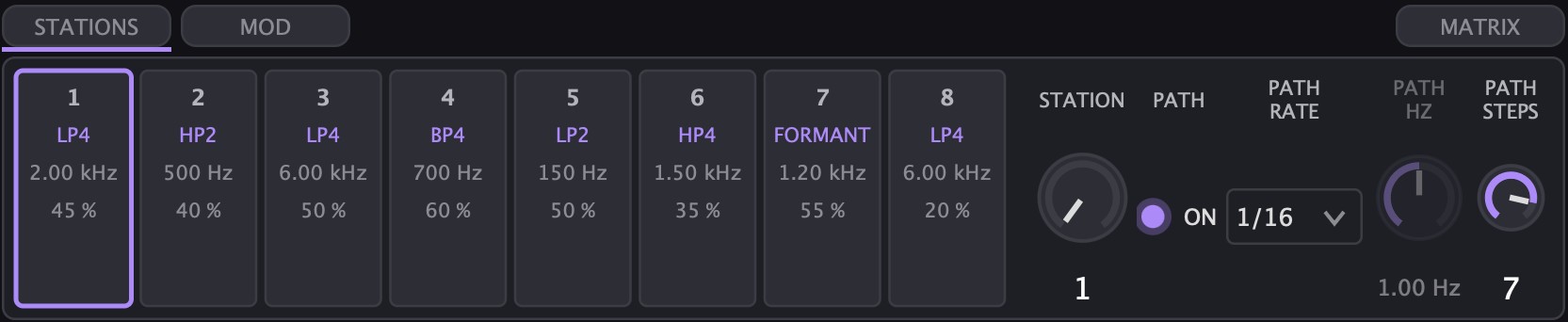
Only the target jumps, the bodies fly. An LP4 on station 1 and a FORMANT on station 2 in sixteenths doesn't mean the bassline switches between two filters. It means that on every sixteenth a swarm of low-pass resonances flies to the vowels and back, and depending on TEMPO it arrives or is already on its way back before it gets there. That gives any bassline or melody line movement that isn't written in any step sequencer.
Modulation: 16 slots, 13 sources, four forces
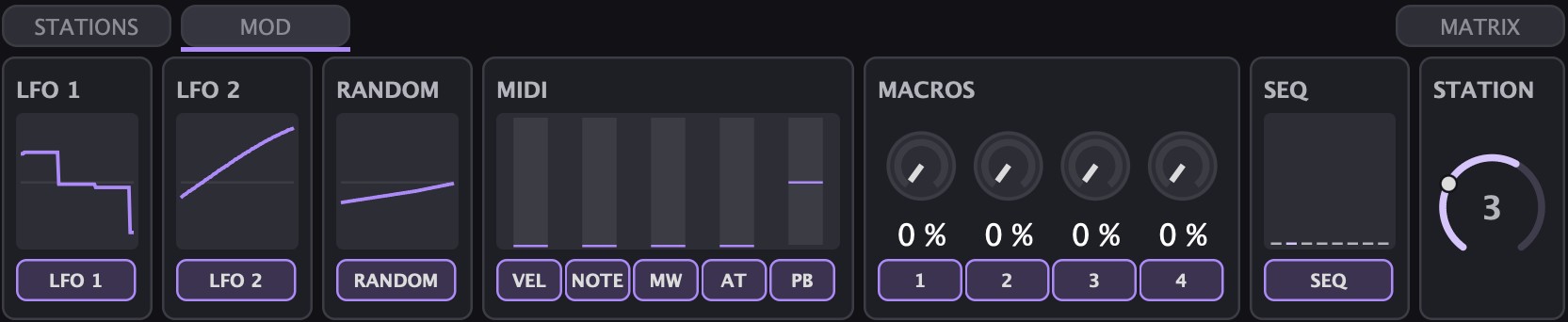
The matrix has 16 slots, each with a depth from minus 100 to plus 100 percent, bipolar or unipolar. You connect by drag and drop: pull a source's handle onto a knob, done. The ring around the knob shows where the modulation is pushing right now.
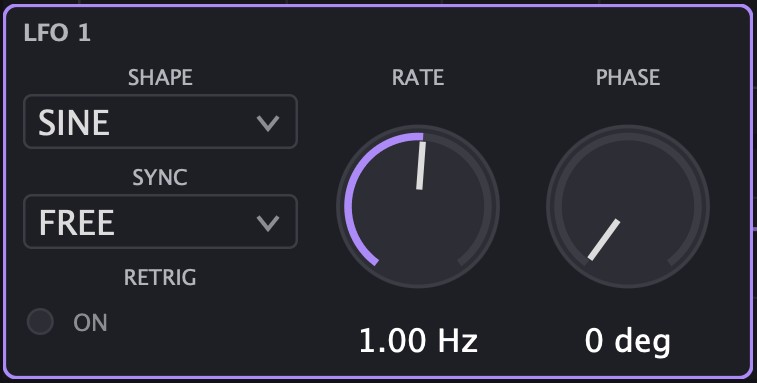
- LFO 1 and LFO 2: sine, triangle, saw, square and sample and hold, synced to the host or free from 0.02 to 40 Hz.
- RANDOM: DRIFT for slow wandering, S&H for random steps.
- MIDI: velocity, note number, mod wheel, aftertouch and pitch bend.
- MACRO 1 to 4: four knobs for everything you want to grab live.
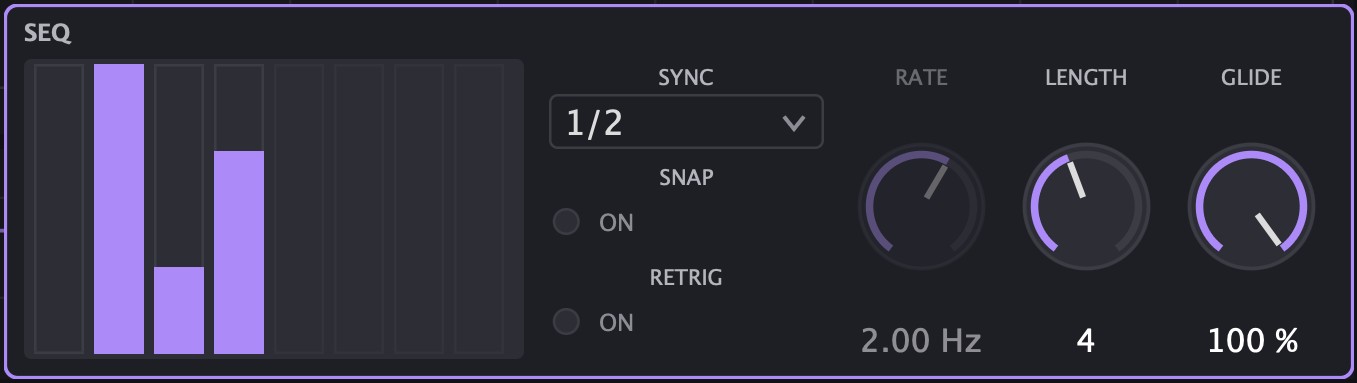
- SEQ: an eight-step sequencer with LENGTH, GLIDE, SNAP and RETRIG.
Any knob can be a target, plus STATION, the rates of the sources and even the depths of other slots: modulation of the modulation. And then there are the four forces that only exist here, because only here are there bodies for them to act on. You drag a source onto the edge of the swarm field and reach straight into the physics:
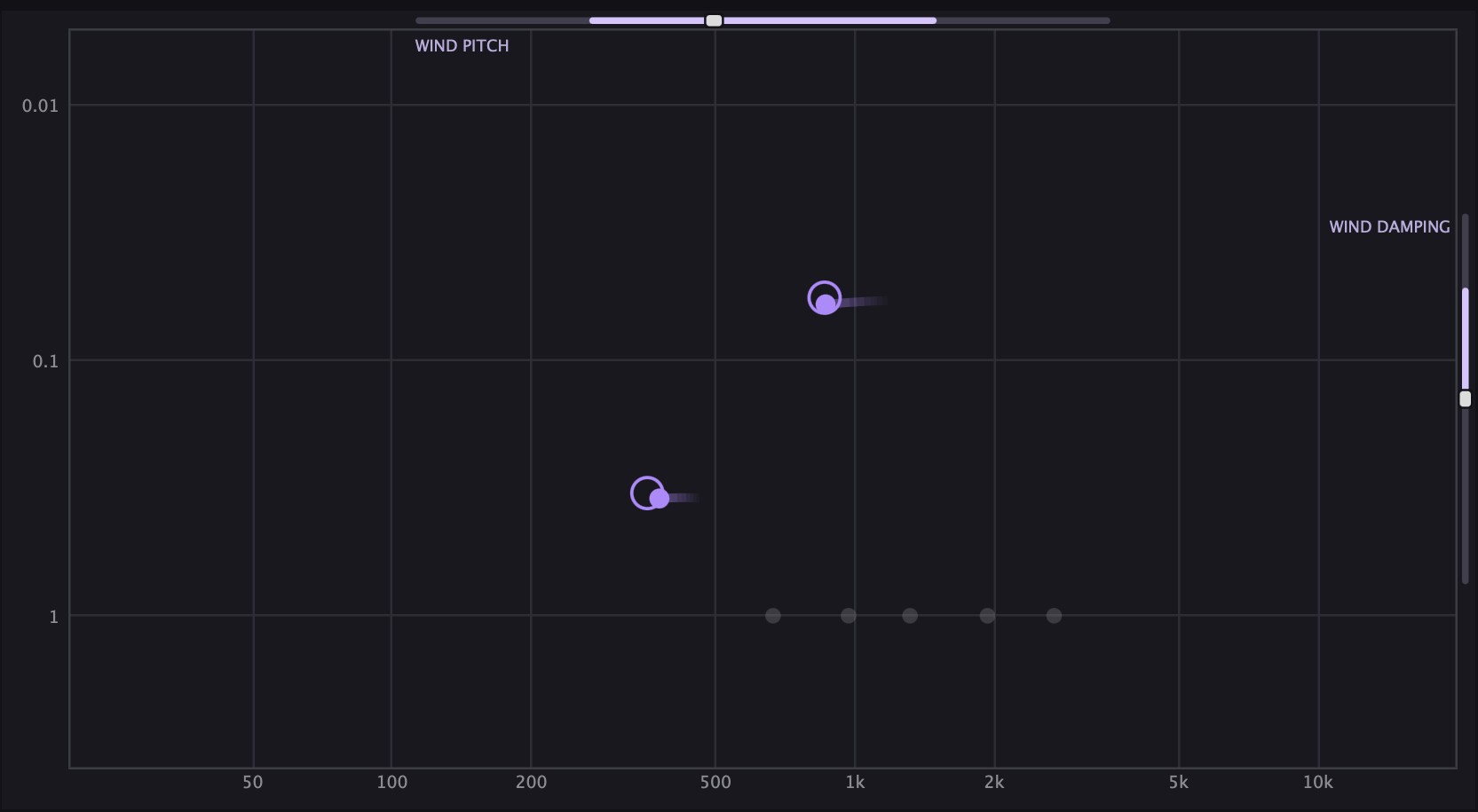
- WIND PITCH shifts the swarm's rest position in frequency, up to twice or down to two thirds of the target.
- WIND DAMPING shifts it in damping, toward wider or narrower resonances.
- SHAKE acts as a random force on every single body.
- GATHER/SCATTER pulls the bodies toward the swarm's center or drives them away from it.
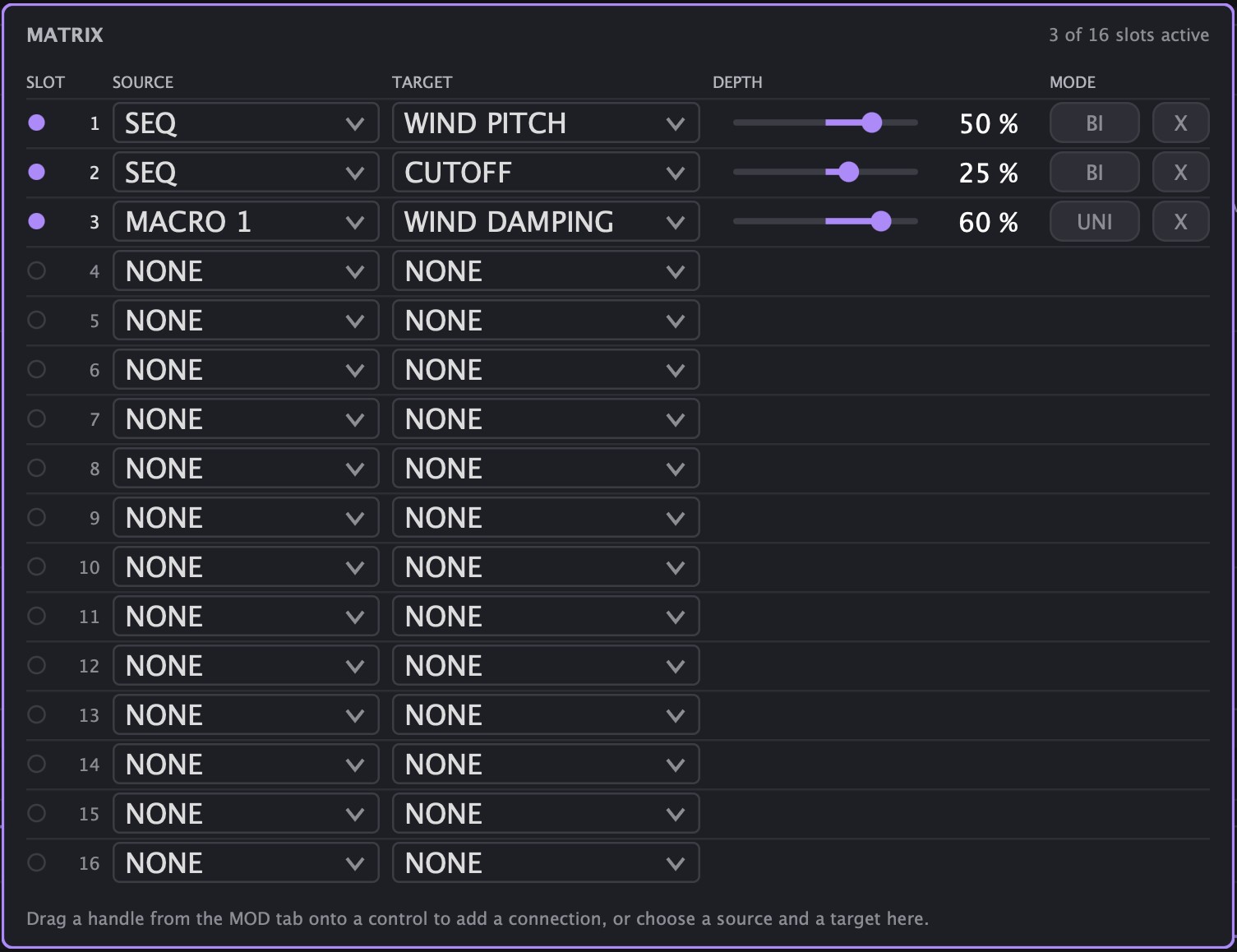
An LFO on SHAKE in sixteenths, and a bassline gets a tremble that is different on every hit. Velocity on WIND PITCH, and hard notes shift the filter upward. RANDOM DRIFT on GATHER/SCATTER, and a pad breathes for twelve minutes without repeating itself.
Who it is for
For electronic music producers who want movement for basslines, leads and melodies that doesn't sound like cutoff automation. Techno and acid: basslines whose filter springs on every hit, sequences with a resonance that rings out instead of cutting off. Drum and bass and breaks: breaks whose band-pass gets kicked by every snare, Reese basses whose resonances crowd each other out. House and dub: chords and pads whose vowels wander along the PATH and never land the same way twice. Bass music: growls from FORMANT and OVERTONES, torn open by MIDI IMPULSE in time with the notes. And for anyone in sound design looking for something nobody else has in their set yet: the Chaos, Glitch and Storm banks are made for exactly that.
70 factory presets in eleven banks
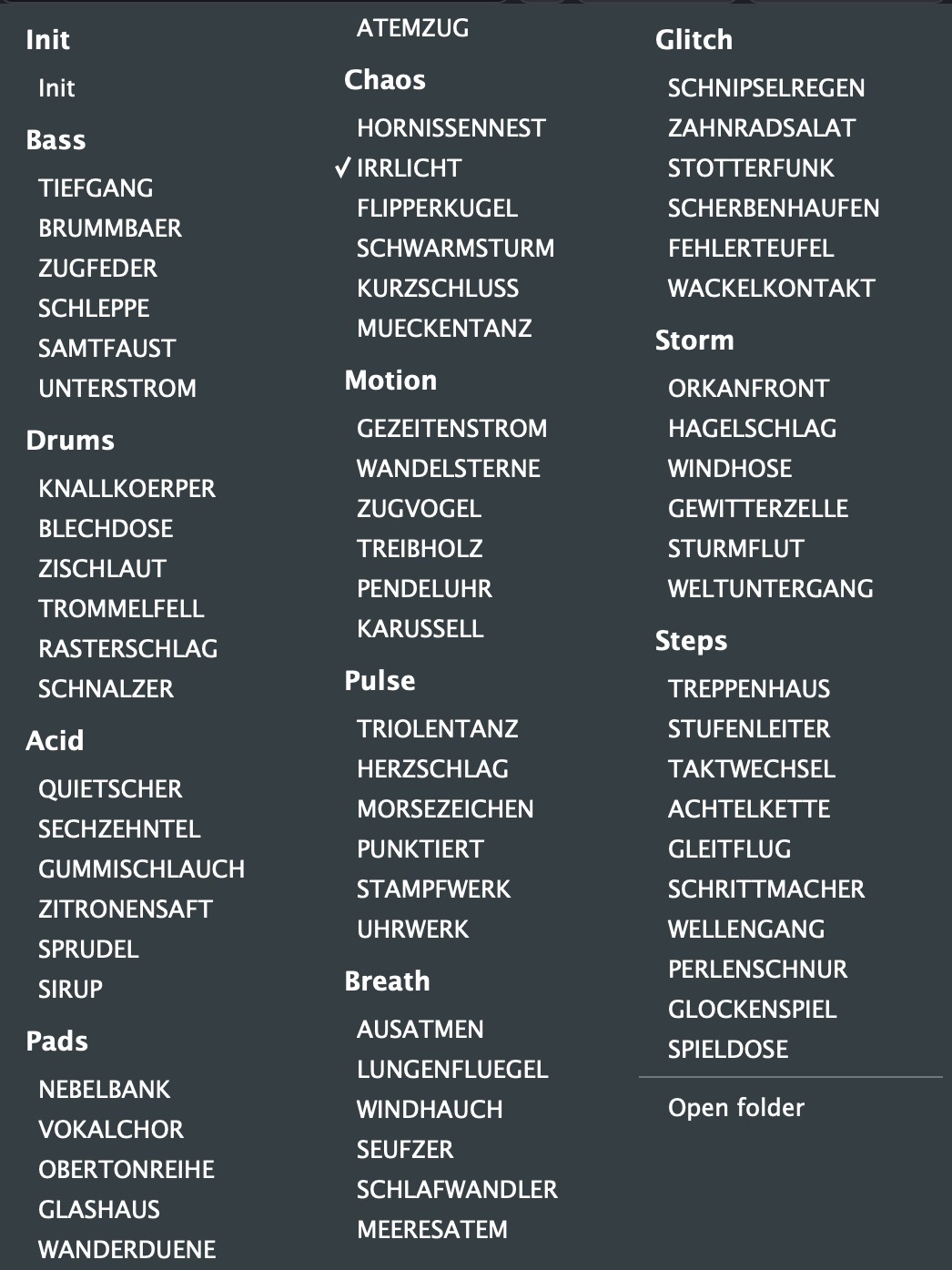
The presets carry German names, the interface is in English. Init comes on top as the starting point.
- Bass (6): TIEFGANG, BRUMMBAER, ZUGFEDER, SCHLEPPE, SAMTFAUST, UNTERSTROM
- Drums (6): KNALLKOERPER, BLECHDOSE, ZISCHLAUT, TROMMELFELL, RASTERSCHLAG, SCHNALZER
- Acid (6): QUIETSCHER, SECHZEHNTEL, GUMMISCHLAUCH, ZITRONENSAFT, SPRUDEL, SIRUP
- Pads (6): NEBELBANK, VOKALCHOR, OBERTONREIHE, GLASHAUS, WANDERDUENE, ATEMZUG
- Chaos (6): HORNISSENNEST, IRRLICHT, FLIPPERKUGEL, SCHWARMSTURM, KURZSCHLUSS, MUECKENTANZ
- Motion (6): GEZEITENSTROM, WANDELSTERNE, ZUGVOGEL, TREIBHOLZ, PENDELUHR, KARUSSELL
- Pulse (6): TRIOLENTANZ, HERZSCHLAG, MORSEZEICHEN, PUNKTIERT, STAMPFWERK, UHRWERK
- Breath (6): AUSATMEN, LUNGENFLUEGEL, WINDHAUCH, SEUFZER, SCHLAFWANDLER, MEERESATEM
- Glitch (6): SCHNIPSELREGEN, ZAHNRADSALAT, STOTTERFUNK, SCHERBENHAUFEN, FEHLERTEUFEL, WACKELKONTAKT
- Storm (6): ORKANFRONT, HAGELSCHLAG, WINDHOSE, GEWITTERZELLE, STURMFLUT, WELTUNTERGANG
- Steps (10): TREPPENHAUS, STUFENLEITER, TAKTWECHSEL, ACHTELKETTE, GLEITFLUG, SCHRITTMACHER, WELLENGANG, PERLENSCHNUR, GLOCKENSPIEL, SPIELDOSE
All factory presets are level-matched to each other, so while browsing you hear sound, not loudness. You can save as many presets of your own as you like.
Technical highlights
- Seven bodies with mass, spring, friction and mutual repulsion, one per second-order filter section
- Coefficients come only from the positions of the bodies, at rest bit-identical to the filter you set
- TEMPO 0.2 to 40 Hz, SWARM, FRICTION and REPULSION as dedicated knobs
- Eight filter types, DRIVE up to 36 dB before every section, AUTO GAIN via a parallel linear cascade
- IMPULSE from transients (THRESHOLD 0 to 18 dB) or MIDI velocity, with DIRECTION
- Eight stations, PATH host-synced from 1/16 to 4 bars with triplets and dotted values, or free from 0.05 to 20 Hz
- Modulation matrix with 16 slots and 13 sources, drag and drop, modulation of the modulation
- Four forces acting directly on the swarm: WIND PITCH, WIND DAMPING, SHAKE, GATHER/SCATTER
- 66 automatable parameters
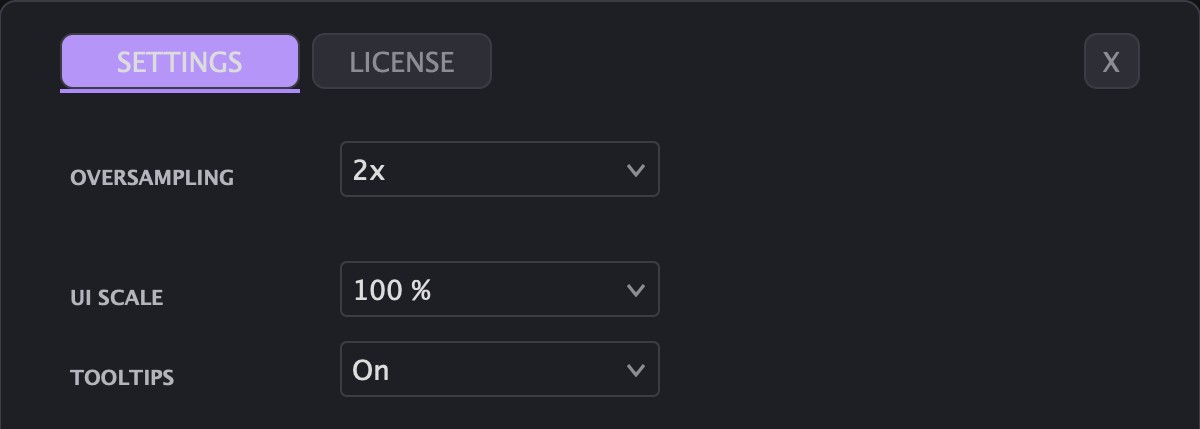
- Oversampling 1x, 2x and 4x, latency at 48 kHz 49 samples at 2x and 61 at 4x, reported to the host, dry path delayed to match
- Control grid of 16 samples; a preset or type change only sets new targets, the swarm flies there instead of jumping
- Swarm field with trails and targets, the frequency response you are hearing below it
- Interface 1100 x 650 px, five zoom levels
- Effect with MIDI input for MIDI IMPULSE and the MIDI sources
Formats & Systems
Formats: VST3, AU (macOS), CLAP, standalone
Systems: macOS 11 Big Sur or later (universal binary, Intel and Apple Silicon), Windows 10+ (64-bit), Linux from Ubuntu 22.04
Made in Berlin
POLSCHWARM was developed entirely in Berlin. The DSP is based on JUCE, the swarm simulation, the filter chain and the modulation are written from scratch. No white label, no generic toolkit filter. Our secret weapon is the joy of detail.
Tools by producers, for producers.
License and demo
The demo runs with the full feature set, nothing is locked. Once a minute, quiet white noise mixes in for three seconds, faded in and out softly so you don't blame it on the filter. The demo allows 30 launches, after that it stays silent until you enter a serial number.
Activation contacts the license server exactly once. After that the plug-in starts with no network access at all, it never phones home. Your serial allows three concurrent activations. The only data transmitted is the serial number, an anonymous hardware fingerprint and the product name, never audio, project data or analytics.
Demo: 0.00 EUR
Full version: 49.00 EUR (incl. 19% VAT)
License Information
This product includes a professional license system with the following features:
- Online activation with hardware fingerprinting
- Up to 3 device activations included
- Automatic license delivery via email
- Customer portal for license management
After purchase, you will receive your license serial number via email within minutes.